




Roadside Hazard Tree Removal
Beaver Tree Surgeons were recently tasked with removing a large Beech tree in Windermere that had been condemned following a detailed inspection. Extensive decay detection and reporting revealed significant internal decay at the base of the stem. Further investigation , along with the presence of decay fungi known to be associated with root rot, strongly indicated that the root plate was also compromised, though the full extent couldn’t be confirmed without invasive excavation.
Due to its position directly beside a road and the structural integrity concerns, this tree posed a high-risk to passing traffic and pedestrians. With advanced root decay present, removal was the only safe option.
We implemented full traffic management for the duration of the works to ensure public safety. The removal was a major operation, requiring all hands on deck — including our crane, large chipper, and timber lorry — to dismantle and process the tree quickly and efficiently with minimal disruption to road users.
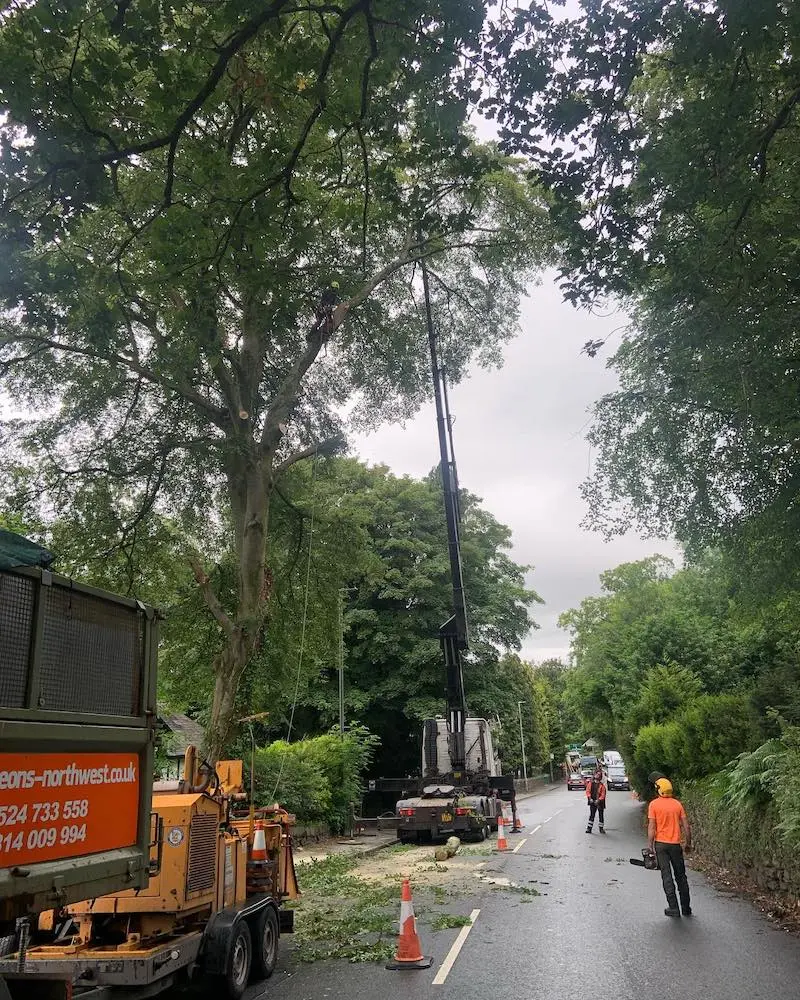
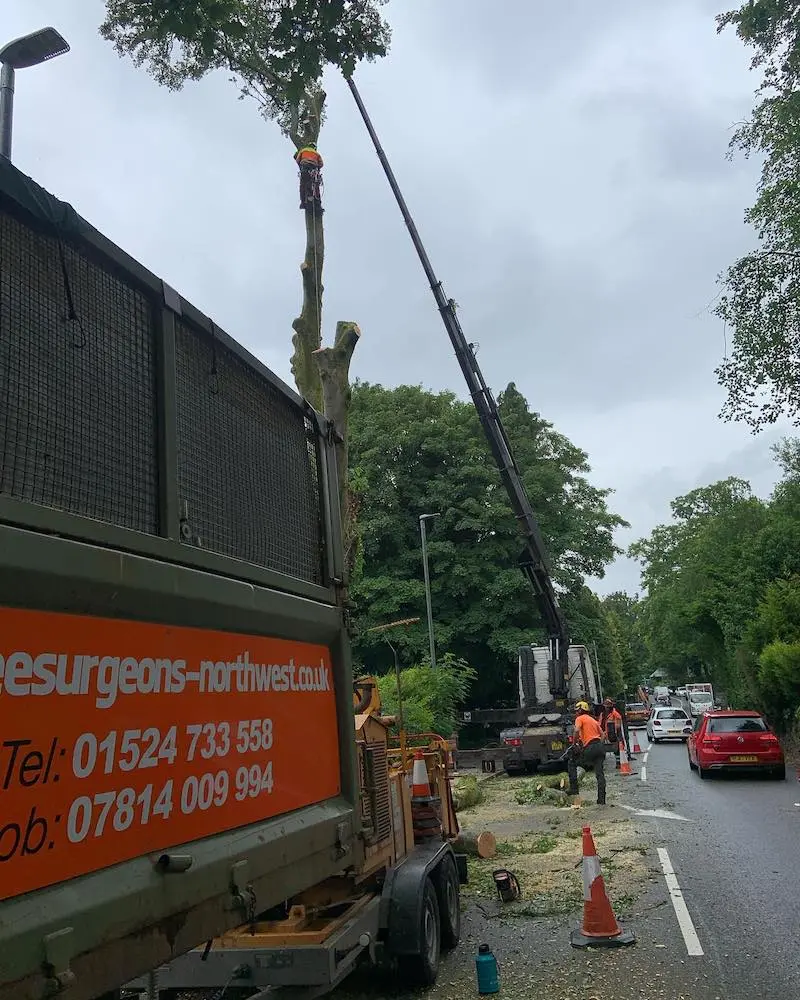
The tree was safely dismantled and removed with zero impact on surrounding infrastructure. The road was reopened swiftly, and the job received positive feedback from both the client and local residents.
Why Root Decay Makes Trees Unstable
Decay at the base of the stem, especially in Beech (which is known for its shallow root sytem) is a serious red flag. Once fungi take hold in the root collar, they can severely compromise the anchoring strength of the tree, even if the canopy still appears healthy.
Root plate failure often occurs suddenly and without warning, especially in wet or windy conditions. That’s why decay detection and early intervention are essential for roadside trees, where the consequences of failure are high.